It appears to me that Colombians, better said Rolos (people from Bogotá) have had a long period of very bad times behind them with the civil war, corruption, poverty, drugs and its drugwars, (that still continue today althought is seems to have entered a period of tranquility) that they don't want to act bad anymore. They have had enough and they don't want to live that downward spiral no more. That maybe one of the reasons why there are so many students walking around. And also for the policy that now is used in Bogotá: the poor people are not allowed to enter the city and are kept in places citypeople won't show up.
 One of the 'barrios' where they live is called Ciudad Bolívar, in the South of Bogotá. Even though French, Canadian and Suisse fundations help to create a wellfare (health, food and education) in that area, it is unwise to enter it, let alone at night. Because like in every big City criminality flourishes at night. But in Bogotá it is more likely to encounter a gun instead of a nife, and if it is a nife it most likely will be part of a group of five to ten, twelf angry men. But don't let this scare you nor believe everything you read or hear; it might as well be a group of twelf foxy women ready to dance with you.
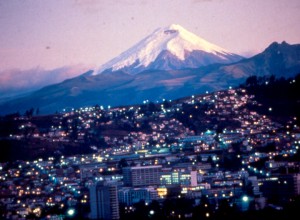
 Around Latin-America Colombia is known as Locombia, Bogatá as Drogotá and the people are known for their wild parties and friendliness. They are curious, ask questions and are helpfull. They seem fearless but alegre, warm and willing to share what they can: food, shelter, drinks, knowlegde, anything. The countryside is endlesly versatile: from mountains and vulcanos with white summits to black and white beaches, jungle and desertlike areas. The land incredibly vertile displaying colours of all kinds. But one has to travel through it to get a glimpse of the beauty of the land and its people. Fearless and curious.
 "La Medicina" is what the indiginous people call this haluciganic tea made of the cactus San Pedro, or San Perdrito. It is used to help with whatever problem one has who takes it, with the guidance of a a so called Sabio, or Shaman. The cactus grows only at specific places close to fresh water like rivers or lakes.

 consumption of the tea, an other smoke, one last consumption, a "Limpo", a cleaning of the negative energy in the bodies of the participants and then a ceremonial meal.
 find answers, conscience or unconscience to the questions one has during such a ceremony.
 with the effects of San Pedro and use it to learn about their lives and thoughts and starts over with new insights optained during such a ceremony
 "Seeking other worlds"
 society and history. The same counts for fear.
 Als je aan Ecuador denkt denk je al snel aan straatmuziekanten met panfluiten, armoede en het houselied waarin iemand steeds roept: "ECUADOR!".
 voor de meerderheid.